> ## Documentation Index
> Fetch the complete documentation index at: https://docs.apiyi.com/llms.txt
> Use this file to discover all available pages before exploring further.
# Навык Image Prompt Doctor
> Упаковывает предварительную проверку prompt перед генерацией в готовый к подключению Agent Skill для Codex, OpenClaw, hermes-agent, Claude Code и других: оценивает prompt по шести элементам, отмечает расплывчатые слова, снижающие качество, и выдает переписанный prompt, который можно использовать как есть. Также может проверить фактический результат по prompt, который его сгенерировал. По умолчанию использует gpt-5.6-luna.
На этой странице вы получаете **готовый к использованию Agent Skill**: выполните проверку prompt **до** генерации, заполните недостающие элементы, уберите расплывчатые слова, которые снижают качество, и сгенерируйте результат по переписанной версии. Всё это — два файла с **нулевой зависимостью от сторонних пакетов**.
Когда изображение разочаровывает, проблема обычно в prompt — не в модели и не в канале. Этот skill превращает «слой переписывания» из [Продвинутой генерации изображений](/ru/api-capabilities/image-advanced-workflow) в нечто, что можно встроить в любой coding agent.
## Что делает навык
По отдельности оценивает объект, окружение, свет, объектив, грейдинг и композицию, выставляет рейтинг от 0 до 100, перечисляет риски и возвращает переписанный prompt, готовый к копированию.
Передайте фактическое изображение вместе с исходным prompt, и модель прочитает его обратно, указывая, **какое предложение prompt не было выполнено**, а также что модель добавила от себя, после чего перепишет текст соответствующим образом.
С `-t` оно добавляет примечания, специфичные для этого семейства: ограничения на референсные изображения, поддержку mask и то, как называется параметр разрешения.
Портреты получают проверки кожи и освещения, снимки товаров — проверки фона и запрета на текст, а иллюстрация автоматически снижает вес чек-листа фотореализма.
## Полная диагностика от начала до конца
Входные данные — это то, что пользователь действительно ввёл бы, плюс изображение, которое получилось:
```bash theme={null}
python3 scripts/prompt_doctor.py "Make me a coffee product shot, make it look nice, make it feel premium" \
-i result.jpg -t nano-banana -s product
```
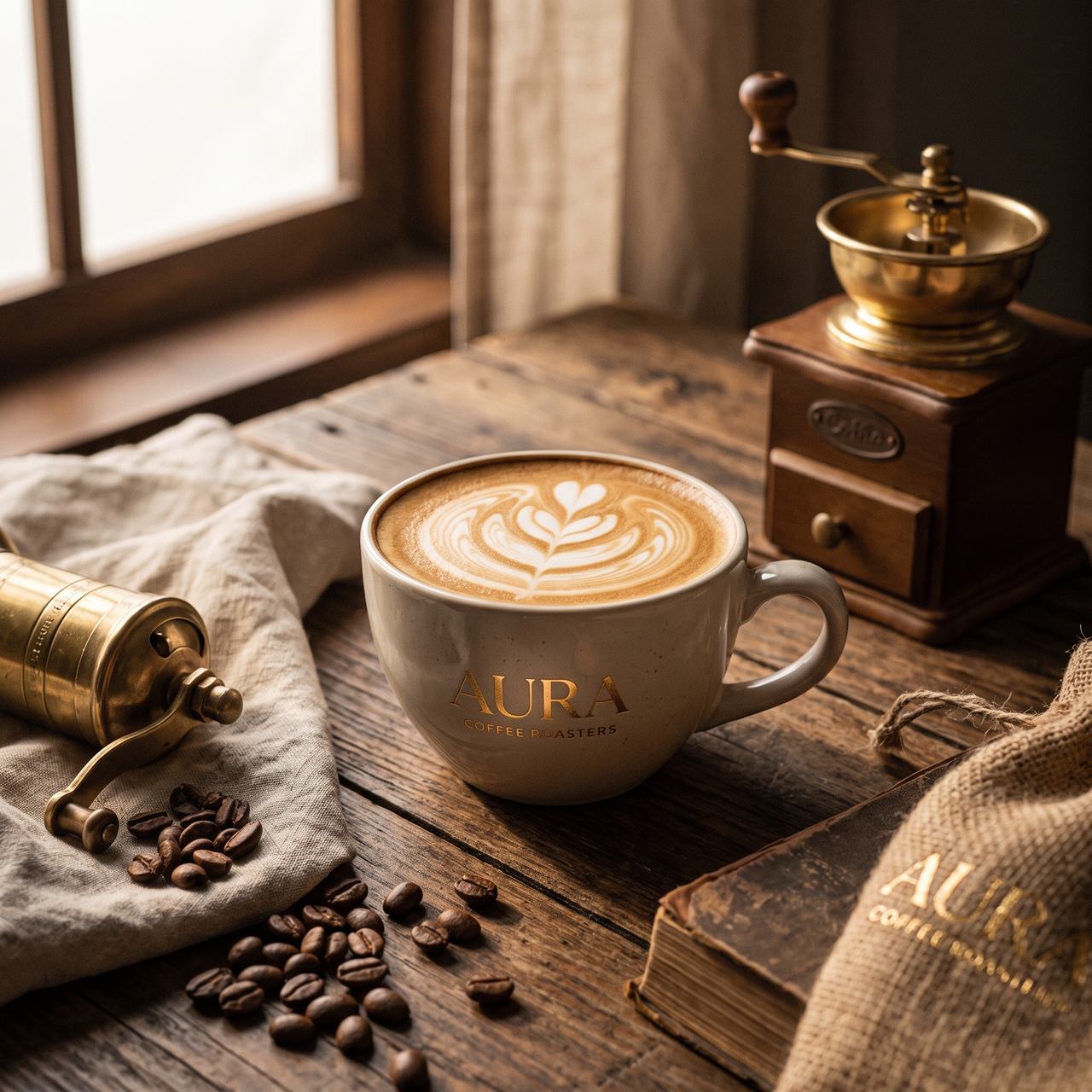 Результат диагностики (фрагмент реального запуска):
```text theme={null}
[Diagnosis] 18/100 - subject is legible, but with no product-photography constraints the
model expanded the frame into a lifestyle scene
Six elements: subject WEAK environment MISSING light MISSING lens MISSING
grading WEAK composition MISSING
Risks:
- "coffee product shot" never states the product form, material, colour or count, so the
model invented a latte-art cup on its own.
- No neutral, controllable background was specified, so the model added a window, a wooden
table, a grinder, coffee beans, a cloth sack and books - the frame reads as lifestyle
photography rather than an e-commerce product shot.
- No key light direction, hardness or fill was given; the result used window light from the
left with heavy warm shadows, none of it controllable.
- "look nice" and "feel premium" are abstract quality claims that were never converted into
a colour temperature, saturation level or photographic medium.
- The prompt never forbade text, so the model produced "AURA COFFEE ROASTERS" on the cup,
a plate on the grinder, and "AURA" on the book at lower right - a wrong-brand and
garbled-text risk for any commercial use.
[Optimized prompt]
An e-commerce product photograph of coffee: the subject is a single matte warm-white ceramic
cup ... (full text omitted)
[Parameter suggestions] size=2K aspect=1:1; 1:1 suits a square hero image, switch to 4:3 for
a landscape ad and keep the negative space on the right.
```
Если подать этот переписанный prompt обратно в ту же модель (`gemini-3-pro-image`) без изменений:
Результат диагностики (фрагмент реального запуска):
```text theme={null}
[Diagnosis] 18/100 - subject is legible, but with no product-photography constraints the
model expanded the frame into a lifestyle scene
Six elements: subject WEAK environment MISSING light MISSING lens MISSING
grading WEAK composition MISSING
Risks:
- "coffee product shot" never states the product form, material, colour or count, so the
model invented a latte-art cup on its own.
- No neutral, controllable background was specified, so the model added a window, a wooden
table, a grinder, coffee beans, a cloth sack and books - the frame reads as lifestyle
photography rather than an e-commerce product shot.
- No key light direction, hardness or fill was given; the result used window light from the
left with heavy warm shadows, none of it controllable.
- "look nice" and "feel premium" are abstract quality claims that were never converted into
a colour temperature, saturation level or photographic medium.
- The prompt never forbade text, so the model produced "AURA COFFEE ROASTERS" on the cup,
a plate on the grinder, and "AURA" on the book at lower right - a wrong-brand and
garbled-text risk for any commercial use.
[Optimized prompt]
An e-commerce product photograph of coffee: the subject is a single matte warm-white ceramic
cup ... (full text omitted)
[Parameter suggestions] size=2K aspect=1:1; 1:1 suits a square hero image, switch to 4:3 for
a landscape ad and keep the negative space on the right.
```
Если подать этот переписанный prompt обратно в ту же модель (`gemini-3-pro-image`) без изменений:
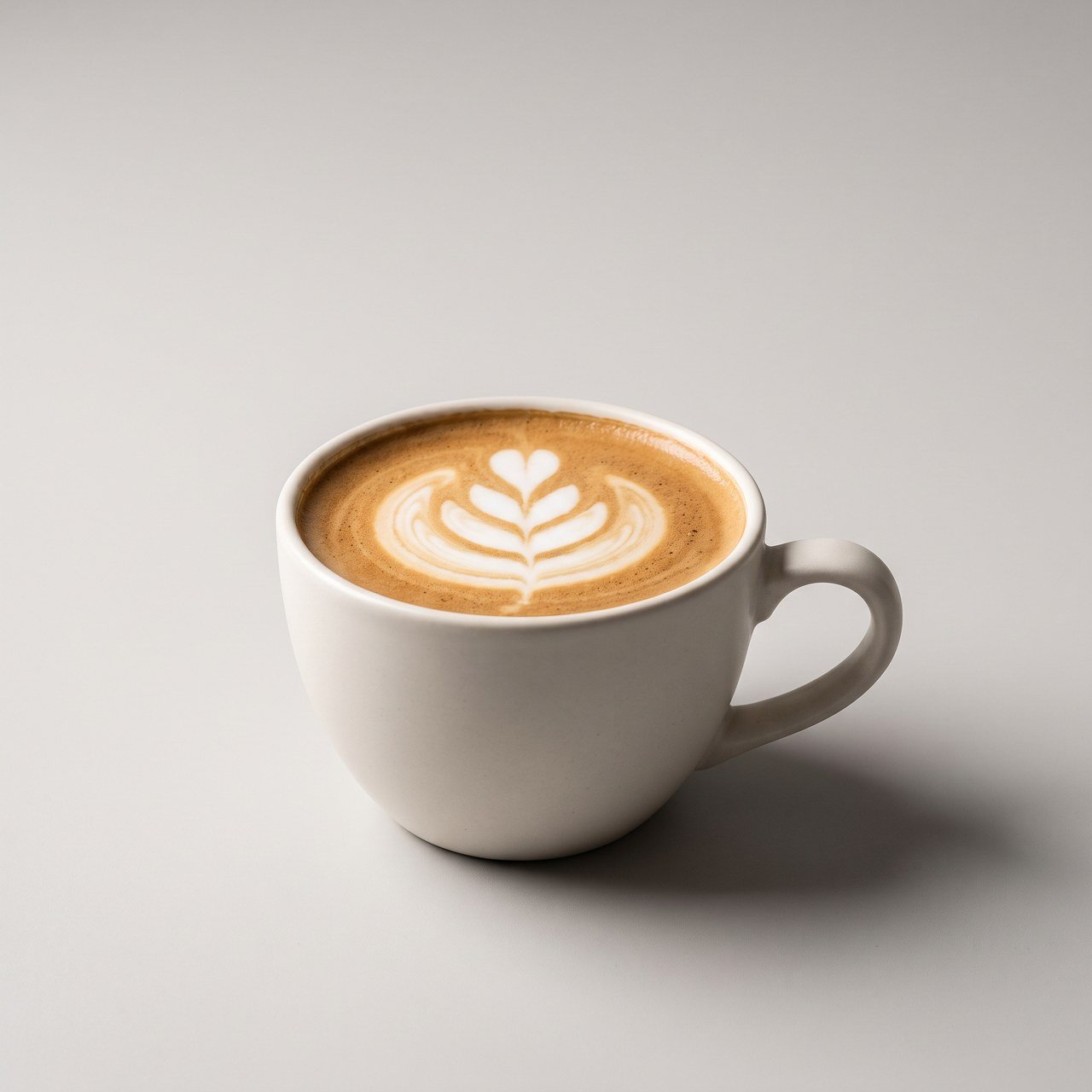 Все реквизиты исчезли, фон стал управляемым нейтральным серым, у тени появилось направление, вымышленное название бренда не возникло, и осталось место для текста. **Модель не изменилась. Изменился только prompt.**
## Когда запускать диагностику
Не каждый запрос требует проверки. Решайте по тому, насколько конкретно уже сформулирован запрос:
| Как выглядит ваш запрос | Что делать |
| --------------------------------------------------------------------------- | ------------------------------------------------------------------------------------------ |
| Непринуждённый, только тема («кадр продукта с кофе, сделайте его красивым») | **Сначала диагностируйте, затем генерируйте** — наибольшая польза |
| Вы что-то сгенерировали, и результат сильно далёк от нужного | **Режим проверки** (`-i` с фактическим результатом), чтобы найти причину |
| Положение света, фокусное расстояние и композиция уже заданы | Пропустите это и генерируйте |
| Генерируете целую серию в одном стиле | Один раз выполните диагностику, чтобы зафиксировать prompt, затем используйте его повторно |
Этот навык только переписывает prompt; он **не генерирует изображения**. Используйте его вместе с [Навыком Nano Banana Pro](/ru/api-capabilities/nano-banana-image/skills) или [Навыком серии GPT-Image-2](/ru/api-capabilities/gpt-image-2/skills), чтобы получить полный процесс проверки и последующей генерации.
## В каких агентах он работает
По сути, Skill — это просто **папка**: один файл сообщает агенту, что это такое (`SKILL.md`), плюс скрипт, который выполняет работу. Поэтому **любой coding agent, который умеет читать локальные файлы и выполнять команды, может использовать его** — Codex, OpenClaw, hermes-agent, Claude Code и другие.
Единственное требование: на машине, где запущен agent, должны быть **Python 3** и **доступ к сети** (скрипт обращается к `api.apiyi.com` напрямую). Этот skill использует **только стандартную библиотеку Python — ничего не нужно устанавливать через pip**.
## Установка в три шага
### 1. Создайте папку и поместите файлы
Создайте папку навыка с этими двумя файлами (полное содержимое в двух разделах ниже):
```
image-prompt-doctor/
├── SKILL.md
├── scripts/
│ └── prompt_doctor.py
└── .env # created in step 2, holds your key
```
Никакой `pip install` не требуется.
### 2. Добавьте свой ключ рядом с ней
Поместите ваш **APIYI API-ключ** (созданный в консоли `api.apiyi.com`) в `image-prompt-doctor/.env`:
```bash theme={null}
APIYI_API_KEY=sk-your-api-key
```
Скрипт автоматически считывает ключ из этого `.env` — **никакой другой настройки или переменной окружения не требуется**.
`.env` хранит ваш секрет. Если этот навык распространяется через репозиторий проекта, **добавьте `.env` в `.gitignore` и никогда не включайте его в коммит**.
### 3. Передайте это агенту
* **Агенты с автоматическим обнаружением навыков** (например, Claude Code): поместите всю папку `image-prompt-doctor/` в их каталог навыков — на уровне пользователя в `~/.claude/skills/` или на уровне проекта в `.claude/skills/` (доступно через репозиторий).
* **Любой другой агент**: разместите его в соответствии с собственной схемой для навыков/плагинов этого агента; или, проще всего, — **просто скажите агенту: «прочитайте SKILL.md в этой папке и следуйте ему.»**
Вот и вся установка. Перейдите к [как использовать его](#how-to-use-it) за примерами.
## SKILL.md
Создайте `image-prompt-doctor/SKILL.md` с полным содержимым ниже (`description` содержит «что он делает + когда его использовать», и именно это агент использует для автоматического срабатывания):
````markdown theme={null}
---
name: image-prompt-doctor
description: Diagnose and optimize an image-generation prompt before generating, or review a disappointing result against the prompt that produced it. Use this whenever the user is about to generate an image from a casual or vague prompt, asks why an image came out wrong, or asks to improve/rewrite an image prompt.
allowed-tools: Bash(python3 *)
---
# Image Prompt Doctor
Review the prompt **before** generating: fill in the missing elements, strip the vague words that
drag quality down, and generate with the rewritten version. You can also feed the actual result
back **after** generating so the model can point out which requirement was not executed.
An API call is a single atomic call. The prompt reaches the model verbatim, with none of the
automatic rewriting a web app does for you — so prompt quality decides the hit rate outright.
## When to use it
- The user's request is casual ("a coffee product shot, make it nice") — **diagnose first, then generate**;
- The user says the image is wrong or far off — **use review mode and read the image back**;
- The user directly asks to improve a prompt.
Skip it when the request is already specific (light position, focal length and composition all present) and just generate.
## Two ways to run it
### Option 1: call the script (default, uses gpt-5.6-luna)
```bash
# Диагностика перед генерацией
python3 ${CLAUDE_SKILL_DIR}/scripts/prompt_doctor.py "снимок кофейного продукта, сделайте его красивым" -t nano-banana -s product
# Проверка после генерации: передайте фактический результат
python3 ${CLAUDE_SKILL_DIR}/scripts/prompt_doctor.py "измените чашку в красной рамке на чёрную, оставьте всё остальное" -i result.png
# JSON для программного использования
python3 ${CLAUDE_SKILL_DIR}/scripts/prompt_doctor.py "иллюстрация китайского пейзажа тушью" -s illustration --json
```
Arguments:
- First positional argument: the prompt to diagnose (required).
- `-i / --image`: path to an actual result, repeatable, up to 4; **passing any switches on review mode**.
- `-t / --target`: target image model, one of `nano-banana` / `gpt-image` / `seedream` / `flux` / `grok`; appends notes specific to that family (reference limits, mask support, parameter names). Omit if unsure.
- `-s / --scene`: subject, one of `portrait` / `product` / `scene` / `illustration`; defaults to `auto`. Illustration automatically down-weights the photorealism checks.
- `--model`: the text model used for diagnosis, default `gpt-5.6-luna` (cheap, accepts images). The `APIYI_TEXT_MODEL` environment variable overrides it.
- `--json`: emit raw JSON.
Key: the script reads `APIYI_API_KEY` from a `.env` file in the skill folder, or from an
environment variable of the same name. If it reports "no key found", ask the user to add a line
`APIYI_API_KEY=sk-xxx` to `.env`.
### Option 2: do it yourself (no key, or no appetite for the extra spend)
There is nothing secret in the rubric — apply the standard below directly, with no API call at all.
Keep the output format identical so the user sees the same thing either way.
## The rubric
**Six elements**, each marked OK (clearly stated) / WEAK (mentioned but vague) / MISSING (absent):
| Element | Test |
|---|---|
| Subject | Are material, colour, count and state specific |
| Environment | What the background is, what is sharp and what is blurred |
| Light | Direction, hardness, fill — **there must be one identifiable key light** |
| Lens | Focal length, aperture, camera height, tilt |
| Grading | White balance bias, saturation, film or digital character |
| Composition | Where the subject sits, where the negative space is |
**Risks you must report:**
- **Vague quality words** (8K / ultra HD / ultra detailed / masterpiece / perfect): they add no resolution and push the frame toward an over-sharpened, oversaturated render — the core of the AI look. Recommend deleting them in favour of specific light, lens and medium.
- **Resolution written into the prompt**: has no effect. Resolution comes only from parameters such as `size` / `imageSize`.
- **Several edits crammed into one sentence**: the single-shot hit rate drops sharply; split into rounds and change one class of thing at a time.
- **Pronouns like "this" or "the thing in the red box"**: the most common failure in editing tasks; name the object.
- **No statement about text in the image**: the model will invent brand names and copy, which makes the frame commercially unusable. Either state what text should appear, or forbid text explicitly.
- **Real people, celebrities, copyrighted characters, minors, violence or adult content**: these get blocked upstream; flag them for rewriting first.
**Rewriting principles**: fill in what is missing rather than padding with adjectives; leave anything
the user specified exactly as written; for realism add specific light positions, focal length and
aperture, a medium, and deliberate imperfections (pores, stray hair, wear, water rings) instead of
abstractions like "realistic" or "premium"; do not emit a separate negative-prompt field — write
what to avoid into the prompt body.
## Output and what to do next
Relay the diagnosis to the user faithfully: score, missing elements, risks, the rewritten prompt,
what changed, and the parameter suggestions.
Then **confirm before generating**: a rewrite can shift the intent (turning "coffee" into "a latte",
for instance), so let the user look first. Once they approve, pass the rewritten prompt to a
generation skill such as `nano-banana-pro`, using the `size` / `aspect` from the parameter suggestions.
If the user says "don't ask, just generate", go straight to generation with the rewritten prompt and
hand back the diagnosis summary alongside the image.
## Boundaries
- This skill only rewrites prompts. It **does not generate images**, and it makes no compliance judgment beyond flagging likely moderation blocks.
- A rewritten prompt can still miss on the first try — single-sample variance is inherent to these models. Retry or switch models.
- Anything that can only be fixed by a parameter (resolution, aspect ratio, reference images) is flagged, never written into the prompt body.
````
## scripts/prompt\_doctor.py
Создайте `image-prompt-doctor/scripts/prompt_doctor.py` со следующим полным содержимым (только стандартная библиотека Python, ничего устанавливать не нужно):
````python theme={null}
#!/usr/bin/env python3
"""Image prompt doctor: review a prompt, flag missing elements, return a rewritten version.
Calls a text model through APIYI (default gpt-5.6-luna). Standard library only, no dependencies.
Two modes:
1) pre-generation diagnosis -- prompt only
2) post-generation review -- prompt plus the actual result, so the model can read it back
"""
import argparse
import base64
import json
import os
import sys
import urllib.error
import urllib.request
DEFAULT_MODEL = "gpt-5.6-luna"
BASE_URL = "https://api.apiyi.com/v1/chat/completions"
MAX_IMAGES = 4
# Extra notes per target family, appended only when --target is given
TARGET_NOTES = {
"nano-banana": "Target is Nano Banana (Gemini family): long natural-language sentences work well, "
"so write flowing paragraphs rather than keyword piles; up to 14 reference images; "
"resolution goes in imageSize (1K/2K/4K) and aspect ratio in aspectRatio.",
"gpt-image": "Target is the GPT-Image family: strong instruction following and accurate in-image text, "
"so specifying exact text is safe; up to 16 reference images; only the official-relay "
"gpt-image-2 supports mask inpainting; resolution goes in size.",
"seedream": "Target is Seedream: strong with Chinese-language briefs; up to 10 reference images "
"(inputs plus outputs must stay at or below 15); 5.0 and 5.0-pro can be prompted to "
"return a PNG with a transparent background.",
"flux": "Target is FLUX: prefers clearly structured description; FLUX.2 pro/max/flex take up to 8 "
"reference images, Kontext takes 1.",
"grok": "Target is Grok Imagine: reference images only take effect on /v1/images/edits — passing them "
"to /v1/images/generations silently discards them and still bills; up to 4 reference images.",
}
SCENE_NOTES = {
"portrait": "This is a portrait. Check especially: is there one key light with a stated direction and "
"hardness, are focal length and aperture given, is natural skin requested (pores, fuzz, "
"shine), is retouching disabled, is the subject moved off dead centre.",
"product": "This is a product or e-commerce shot. Check especially: is the background specified as "
"neutral and controllable, are key light and fill written out, is the shadow direction given, "
"is text and branding explicitly forbidden (otherwise the model invents them), is negative "
"space left for copy.",
"scene": "This is an environment. Check especially: specific time and weather, one identifiable key "
"light, camera height and focal length, whether wear and clutter were added for realism, "
"whether people are asked not to face the camera.",
"illustration": "This is illustration, not photorealism. Down-weight the realism checklist and instead "
"check: is the style named specifically (medium, brushwork, era, school), the palette, "
"the line and colouring method, composition and negative space.",
}
SYSTEM = """You are an image prompt diagnostician serving developers and designers who call image
models directly over an API. An API call is a single atomic call: the prompt reaches the model
verbatim, with none of the automatic rewriting a web app does, so prompt quality decides the hit rate.
## Rubric
First mark each of the six elements ok (clearly stated) / weak (mentioned but vague) / missing:
1 subject: are material, colour, count and state specific
2 environment: what the background is, what is sharp and what is blurred
3 light: direction, hardness, fill -- there must be one identifiable key light
4 lens: focal length, aperture, camera height, tilt
5 tone: white balance bias, saturation, film or digital character
6 composition: where the subject sits in the frame, where the negative space is
## Risks you must report
- Vague quality words such as 8K / ultra HD / ultra detailed / masterpiece / perfect: they add no
resolution and push the frame toward an over-sharpened, oversaturated render, which is the core of
the AI look. Always recommend deleting them in favour of specific light, lens and medium.
- Resolution written into the prompt (4K/8K/high definition): no effect. Resolution comes only from
parameters such as size / imageSize.
- Several unrelated edits crammed into one sentence: the single-shot hit rate drops sharply; split
into rounds.
- Pronouns such as "this" or "the thing in the red box" instead of naming the object: the most
common failure in editing tasks.
- No statement about text in the image: the model may invent brand names or copy, which makes the
frame commercially unusable. Either state what text should appear, or forbid text explicitly.
- Real people, celebrities, copyrighted characters, minors, violence or adult content: these get
blocked upstream and need rewriting first.
## Rewriting principles
- Fill in what is missing; do not pad the prompt with adjectives to make it longer.
- Leave anything the user specified exactly as written.
- For realism, add specific light positions, focal length and aperture, a film or digital medium, and
deliberate imperfections (pores, stray hair, wear, water rings) rather than abstractions such as
"realistic" or "premium".
- Do not emit negative-prompt syntax (most image models have no separate negative prompt field);
write what to avoid into the prompt body.
- optimized_prompt and changes must use the same language as the user's original prompt.
## Output
Emit exactly this JSON, with no code fence and no extra commentary:
{
"score": integer 0-100 for how usable this prompt is in a single shot,
"verdict": "one-line summary, at most 20 words",
"elements": {"subject":"ok|weak|missing","environment":"...","light":"...","lens":"...","tone":"...","composition":"..."},
"risks": ["one sentence each, stating the problem and its consequence; empty array if none"],
"optimized_prompt": "the full rewritten prompt, ready to use as-is",
"changes": ["what changed and why, one per entry"],
"suggested_params": {"size":"1K|2K|4K","aspect":"e.g. 1:1 / 16:9","note":"parameter advice, empty string if none"}
}"""
REVIEW_EXTRA = """
## This run is a post-generation review
The user already generated an image from the prompt below; the actual result is attached. Check it
against the prompt line by line: what was honoured, what was not, and what the model added on its
own. In risks, state explicitly which sentence of the prompt was not executed, and rewrite
optimized_prompt to target those deviations rather than generically filling in elements."""
def load_api_key():
"""Prefer the environment variable; otherwise look for .env beside the script or one level up."""
key = os.environ.get("APIYI_API_KEY")
if key:
return key
here = os.path.dirname(os.path.abspath(__file__))
for d in (here, os.path.dirname(here)):
env_path = os.path.join(d, ".env")
if os.path.exists(env_path):
with open(env_path, encoding="utf-8") as f:
for line in f:
line = line.strip()
if line.startswith("APIYI_API_KEY") and "=" in line:
return line.split("=", 1)[1].strip().strip('"').strip("'")
return None
def image_data_url(path):
mime = "image/png" if path.lower().endswith(".png") else "image/jpeg"
with open(path, "rb") as f:
return f"data:{mime};base64," + base64.b64encode(f.read()).decode()
def build_messages(prompt, images, target, scene):
system = SYSTEM
if images:
system += REVIEW_EXTRA
extras = [TARGET_NOTES[target]] if target else []
if scene and scene != "auto":
extras.append(SCENE_NOTES[scene])
if extras:
system += "\n\n## Extra constraints for this run\n\n" + "\n".join("- " + e for e in extras)
content = [{"type": "text", "text": "Prompt to diagnose:\n\n" + prompt}]
for path in images:
content.append({"type": "image_url", "image_url": {"url": image_data_url(path)}})
return [{"role": "system", "content": system},
{"role": "user", "content": content}]
def diagnose(api_key, model, messages):
payload = json.dumps({
"model": model,
"messages": messages,
"response_format": {"type": "json_object"},
}).encode()
req = urllib.request.Request(
BASE_URL, data=payload, method="POST",
headers={"Authorization": f"Bearer {api_key}", "Content-Type": "application/json"},
)
try:
with urllib.request.urlopen(req, timeout=180) as r:
resp = json.loads(r.read())
except urllib.error.HTTPError as e:
raise RuntimeError(f"request failed HTTP {e.code}: {e.read().decode(errors='replace')[:500]}")
text = resp["choices"][0]["message"]["content"].strip()
if text.startswith("```"): # defensive: some models still wrap in a fence
text = text.split("\n", 1)[1].rsplit("```", 1)[0]
try:
return json.loads(text)
except json.JSONDecodeError:
raise RuntimeError("model did not return valid JSON, raw output:\n" + text[:800])
MARK = {"ok": "OK", "weak": "WEAK", "missing": "MISSING"}
LABEL = {"subject": "subject", "environment": "environment", "light": "light",
"lens": "lens", "tone": "grading", "composition": "composition"}
def render(r):
out = [f"[Diagnosis] {r.get('score', '?')}/100 - {r.get('verdict', '')}", ""]
els = r.get("elements", {})
out.append("Six elements: " + " ".join(
f"{LABEL.get(k, k)} {MARK.get(v, '?')}" for k, v in els.items()))
risks = r.get("risks") or []
if risks:
out += ["", "Risks:"] + [f" - {x}" for x in risks]
else:
out += ["", "Risks: none"]
out += ["", "[Optimized prompt]", "", r.get("optimized_prompt", "")]
changes = r.get("changes") or []
if changes:
out += ["", "[What changed]"] + [f" - {x}" for x in changes]
p = r.get("suggested_params") or {}
bits = []
if p.get("size"):
bits.append(f"size={p['size']}")
if p.get("aspect"):
bits.append(f"aspect={p['aspect']}")
line = " ".join(bits)
if p.get("note"):
line = (line + "; " if line else "") + p["note"]
if line:
out += ["", "[Parameter suggestions] " + line]
return "\n".join(out)
def main():
parser = argparse.ArgumentParser(description="Diagnose and optimize an image prompt")
parser.add_argument("prompt", help="the prompt to diagnose")
parser.add_argument("-i", "--image", action="append", default=[],
help=f"path to an actual result, repeatable (up to {MAX_IMAGES}); switches on review mode")
parser.add_argument("-t", "--target", choices=sorted(TARGET_NOTES),
help="target image model, to append notes specific to that family")
parser.add_argument("-s", "--scene", choices=["auto"] + sorted(SCENE_NOTES), default="auto",
help="subject, default auto (no subject-specific checks appended)")
parser.add_argument("--model", default=os.environ.get("APIYI_TEXT_MODEL", DEFAULT_MODEL),
help=f"text model used for diagnosis, default {DEFAULT_MODEL}")
parser.add_argument("--json", action="store_true", help="emit raw JSON for programmatic use")
args = parser.parse_args()
api_key = load_api_key()
if not api_key:
sys.exit("no API key found: add a line APIYI_API_KEY=sk-xxx to .env in the skill folder, "
"or set the environment variable of the same name")
if len(args.image) > MAX_IMAGES:
sys.exit(f"at most {MAX_IMAGES} images, got {len(args.image)}")
for path in args.image:
if not os.path.exists(path):
sys.exit(f"image not found: {path}")
messages = build_messages(args.prompt, args.image, args.target, args.scene)
try:
result = diagnose(api_key, args.model, messages)
except RuntimeError as e:
sys.exit(str(e))
print(json.dumps(result, ensure_ascii=False, indent=2) if args.json else render(result))
if __name__ == "__main__":
main()
````
## Переключение модели диагностики
По умолчанию — `gpt-5.6-luna`: недорогая (\$0.2 на вход / \$1.2 на выход за миллион tokens) и принимает изображения, что необходимо для режима проверки. Есть два способа сменить её:
```bash theme={null}
# Override for one run
... prompt_doctor.py "your prompt" --model gemini-3.5-flash
# Change the default: add a line to image-prompt-doctor/.env
APIYI_TEXT_MODEL=gemini-3.5-flash
```
На что обратить внимание при переключении: **режиму проверки требуется модель, которая принимает изображения** (текстовая модель выдаст ошибку при прикрепленном изображении) — см. [Понимание изображений](/ru/api-capabilities/vision-understanding) со списком. И скрипт отправляет `response_format: {"type": "json_object"}`, поэтому модель без режима JSON может вместо этого вернуть текст в блоке кода (скрипт на всякий случай удаляет обрамление блока кода, но лучше использовать модель, которая поддерживает режим JSON).
## Почему одна фраза запускает диагностику
Распространённый вопрос: я никогда не вводил команду, так почему фраза «draw me an image» заставила сначала проверить prompt?
Вот как это работает: при запуске агент **читает `description` в каждом `SKILL.md` навыка** — короткий фрагмент метаданных, который говорит, что делает этот навык и когда он применяется. Когда то, что вы говорите, **совпадает** с этим описанием («draw me a …», «why did this image come out wrong», «improve this prompt»), агент **самостоятельно решает вызвать навык**, читает полный `SKILL.md` и запускает скрипт. Вам не нужно запоминать команду.
В SKILL.md также указано, что запрос, который уже достаточно конкретный, не требует такой обработки, поэтому он не будет вмешиваться в каждый prompt. Когда вам нужен **полный контроль**, используйте явный вызов ниже.
## Как использовать
### Естественный язык (неявный триггер)
После установки просто обращайтесь к агенту:
| Вы говорите | Что делает навык |
| ------------------------------------------------------------- | ----------------------------------------------------------------------------- |
| "Нарисуй мне продуктовый кадр с кофе, сделай его красивым" | Неформальный запрос → диагностирует, сообщает, подтверждает, затем генерирует |
| "Почему это изображение вышло неправильным?" (с изображением) | Режим проверки через `-i`, считывание изображения обратно |
| "Улучшите этот prompt" | Только диагностика, без генерации |
| "Сгенерируй с gpt-image-2, но сначала проверь мой prompt" | Добавляет `-t gpt-image` для заметок, специфичных для семейства |
| "Пропусти диагностику, просто сгенерируй" | Обходит этот навык и вызывает навык генерации |
### Явный вызов (больше контроля)
* **Агенты с slash-командами** (например, Claude Code):
```text theme={null}
/image-prompt-doctor a woman smiling by a cafe window -s portrait
```
* **Любой агент / просто скажите ему запустить скрипт** (наиболее универсальный):
```text theme={null}
Run python3 image-prompt-doctor/scripts/prompt_doctor.py "a woman smiling by a cafe window" -s portrait
```
## Куда попадает диагностика
* Этот навык **не записывает файлы**. Результат выводится в терминал, а агент пересылает его вам — оценка, оценки по шести элементам, риски, переписанный prompt, что изменилось и рекомендации по параметрам.
* Чтобы передать результат в вашу собственную программу, добавьте `--json`; output — это структурированный объект (`score` / `elements` / `risks` / `optimized_prompt` / `changes` / `suggested_params`), который можно перенаправить в файл:
```bash theme={null}
python3 image-prompt-doctor/scripts/prompt_doctor.py "your prompt" --json > diagnosis.json
```
* **Подтвердите переписанный prompt перед использованием**: переписывание может изменить намерение (превратив «кофе» в «латте»), а SKILL.md уже говорит агенту сначала спросить.
* Изображения, переданные в режим review, **никогда не изменяются и не перезаписываются** — это входные данные только для чтения.
## Стоимость
Одна диагностика стоит несколько тысяч token. По прайс-листу `gpt-5.6-luna` это доли цента, тогда как одна генерация качества `high` стоит в десятки раз дороже. **Диагностика перед генерацией позволяет сэкономить больше на избежанных повторных попытках, чем она стоит.**
В режиме Review загружается изображение, и это тарифицируется как input tokens — немного дороже, но всё ещё намного ниже одной генерации.
## Связанная документация
* [Продвинутая генерация изображений: рабочий процесс и реализм](/ru/api-capabilities/image-advanced-workflow) (где этот skill находится во всем pipeline)
* [Как получить нужное изображение](/ru/api-capabilities/image-generation-success-tips) (восстановление одного неудачного вызова)
* [Agent Skill Nano Banana Pro](/ru/api-capabilities/nano-banana-image/skills) (сопутствующий skill генерации, который можно выстроить в цепочку после диагностики)
* [Agent Skill серии GPT-Image-2](/ru/api-capabilities/gpt-image-2/skills) (то же самое, для линейки GPT)
* [GPT-5.6 Luna](/ru/models/gpt-5-6-luna) (модель диагностики по умолчанию: specs, pricing и поддержка endpoint)
Все реквизиты исчезли, фон стал управляемым нейтральным серым, у тени появилось направление, вымышленное название бренда не возникло, и осталось место для текста. **Модель не изменилась. Изменился только prompt.**
## Когда запускать диагностику
Не каждый запрос требует проверки. Решайте по тому, насколько конкретно уже сформулирован запрос:
| Как выглядит ваш запрос | Что делать |
| --------------------------------------------------------------------------- | ------------------------------------------------------------------------------------------ |
| Непринуждённый, только тема («кадр продукта с кофе, сделайте его красивым») | **Сначала диагностируйте, затем генерируйте** — наибольшая польза |
| Вы что-то сгенерировали, и результат сильно далёк от нужного | **Режим проверки** (`-i` с фактическим результатом), чтобы найти причину |
| Положение света, фокусное расстояние и композиция уже заданы | Пропустите это и генерируйте |
| Генерируете целую серию в одном стиле | Один раз выполните диагностику, чтобы зафиксировать prompt, затем используйте его повторно |
Этот навык только переписывает prompt; он **не генерирует изображения**. Используйте его вместе с [Навыком Nano Banana Pro](/ru/api-capabilities/nano-banana-image/skills) или [Навыком серии GPT-Image-2](/ru/api-capabilities/gpt-image-2/skills), чтобы получить полный процесс проверки и последующей генерации.
## В каких агентах он работает
По сути, Skill — это просто **папка**: один файл сообщает агенту, что это такое (`SKILL.md`), плюс скрипт, который выполняет работу. Поэтому **любой coding agent, который умеет читать локальные файлы и выполнять команды, может использовать его** — Codex, OpenClaw, hermes-agent, Claude Code и другие.
Единственное требование: на машине, где запущен agent, должны быть **Python 3** и **доступ к сети** (скрипт обращается к `api.apiyi.com` напрямую). Этот skill использует **только стандартную библиотеку Python — ничего не нужно устанавливать через pip**.
## Установка в три шага
### 1. Создайте папку и поместите файлы
Создайте папку навыка с этими двумя файлами (полное содержимое в двух разделах ниже):
```
image-prompt-doctor/
├── SKILL.md
├── scripts/
│ └── prompt_doctor.py
└── .env # created in step 2, holds your key
```
Никакой `pip install` не требуется.
### 2. Добавьте свой ключ рядом с ней
Поместите ваш **APIYI API-ключ** (созданный в консоли `api.apiyi.com`) в `image-prompt-doctor/.env`:
```bash theme={null}
APIYI_API_KEY=sk-your-api-key
```
Скрипт автоматически считывает ключ из этого `.env` — **никакой другой настройки или переменной окружения не требуется**.
`.env` хранит ваш секрет. Если этот навык распространяется через репозиторий проекта, **добавьте `.env` в `.gitignore` и никогда не включайте его в коммит**.
### 3. Передайте это агенту
* **Агенты с автоматическим обнаружением навыков** (например, Claude Code): поместите всю папку `image-prompt-doctor/` в их каталог навыков — на уровне пользователя в `~/.claude/skills/` или на уровне проекта в `.claude/skills/` (доступно через репозиторий).
* **Любой другой агент**: разместите его в соответствии с собственной схемой для навыков/плагинов этого агента; или, проще всего, — **просто скажите агенту: «прочитайте SKILL.md в этой папке и следуйте ему.»**
Вот и вся установка. Перейдите к [как использовать его](#how-to-use-it) за примерами.
## SKILL.md
Создайте `image-prompt-doctor/SKILL.md` с полным содержимым ниже (`description` содержит «что он делает + когда его использовать», и именно это агент использует для автоматического срабатывания):
````markdown theme={null}
---
name: image-prompt-doctor
description: Diagnose and optimize an image-generation prompt before generating, or review a disappointing result against the prompt that produced it. Use this whenever the user is about to generate an image from a casual or vague prompt, asks why an image came out wrong, or asks to improve/rewrite an image prompt.
allowed-tools: Bash(python3 *)
---
# Image Prompt Doctor
Review the prompt **before** generating: fill in the missing elements, strip the vague words that
drag quality down, and generate with the rewritten version. You can also feed the actual result
back **after** generating so the model can point out which requirement was not executed.
An API call is a single atomic call. The prompt reaches the model verbatim, with none of the
automatic rewriting a web app does for you — so prompt quality decides the hit rate outright.
## When to use it
- The user's request is casual ("a coffee product shot, make it nice") — **diagnose first, then generate**;
- The user says the image is wrong or far off — **use review mode and read the image back**;
- The user directly asks to improve a prompt.
Skip it when the request is already specific (light position, focal length and composition all present) and just generate.
## Two ways to run it
### Option 1: call the script (default, uses gpt-5.6-luna)
```bash
# Диагностика перед генерацией
python3 ${CLAUDE_SKILL_DIR}/scripts/prompt_doctor.py "снимок кофейного продукта, сделайте его красивым" -t nano-banana -s product
# Проверка после генерации: передайте фактический результат
python3 ${CLAUDE_SKILL_DIR}/scripts/prompt_doctor.py "измените чашку в красной рамке на чёрную, оставьте всё остальное" -i result.png
# JSON для программного использования
python3 ${CLAUDE_SKILL_DIR}/scripts/prompt_doctor.py "иллюстрация китайского пейзажа тушью" -s illustration --json
```
Arguments:
- First positional argument: the prompt to diagnose (required).
- `-i / --image`: path to an actual result, repeatable, up to 4; **passing any switches on review mode**.
- `-t / --target`: target image model, one of `nano-banana` / `gpt-image` / `seedream` / `flux` / `grok`; appends notes specific to that family (reference limits, mask support, parameter names). Omit if unsure.
- `-s / --scene`: subject, one of `portrait` / `product` / `scene` / `illustration`; defaults to `auto`. Illustration automatically down-weights the photorealism checks.
- `--model`: the text model used for diagnosis, default `gpt-5.6-luna` (cheap, accepts images). The `APIYI_TEXT_MODEL` environment variable overrides it.
- `--json`: emit raw JSON.
Key: the script reads `APIYI_API_KEY` from a `.env` file in the skill folder, or from an
environment variable of the same name. If it reports "no key found", ask the user to add a line
`APIYI_API_KEY=sk-xxx` to `.env`.
### Option 2: do it yourself (no key, or no appetite for the extra spend)
There is nothing secret in the rubric — apply the standard below directly, with no API call at all.
Keep the output format identical so the user sees the same thing either way.
## The rubric
**Six elements**, each marked OK (clearly stated) / WEAK (mentioned but vague) / MISSING (absent):
| Element | Test |
|---|---|
| Subject | Are material, colour, count and state specific |
| Environment | What the background is, what is sharp and what is blurred |
| Light | Direction, hardness, fill — **there must be one identifiable key light** |
| Lens | Focal length, aperture, camera height, tilt |
| Grading | White balance bias, saturation, film or digital character |
| Composition | Where the subject sits, where the negative space is |
**Risks you must report:**
- **Vague quality words** (8K / ultra HD / ultra detailed / masterpiece / perfect): they add no resolution and push the frame toward an over-sharpened, oversaturated render — the core of the AI look. Recommend deleting them in favour of specific light, lens and medium.
- **Resolution written into the prompt**: has no effect. Resolution comes only from parameters such as `size` / `imageSize`.
- **Several edits crammed into one sentence**: the single-shot hit rate drops sharply; split into rounds and change one class of thing at a time.
- **Pronouns like "this" or "the thing in the red box"**: the most common failure in editing tasks; name the object.
- **No statement about text in the image**: the model will invent brand names and copy, which makes the frame commercially unusable. Either state what text should appear, or forbid text explicitly.
- **Real people, celebrities, copyrighted characters, minors, violence or adult content**: these get blocked upstream; flag them for rewriting first.
**Rewriting principles**: fill in what is missing rather than padding with adjectives; leave anything
the user specified exactly as written; for realism add specific light positions, focal length and
aperture, a medium, and deliberate imperfections (pores, stray hair, wear, water rings) instead of
abstractions like "realistic" or "premium"; do not emit a separate negative-prompt field — write
what to avoid into the prompt body.
## Output and what to do next
Relay the diagnosis to the user faithfully: score, missing elements, risks, the rewritten prompt,
what changed, and the parameter suggestions.
Then **confirm before generating**: a rewrite can shift the intent (turning "coffee" into "a latte",
for instance), so let the user look first. Once they approve, pass the rewritten prompt to a
generation skill such as `nano-banana-pro`, using the `size` / `aspect` from the parameter suggestions.
If the user says "don't ask, just generate", go straight to generation with the rewritten prompt and
hand back the diagnosis summary alongside the image.
## Boundaries
- This skill only rewrites prompts. It **does not generate images**, and it makes no compliance judgment beyond flagging likely moderation blocks.
- A rewritten prompt can still miss on the first try — single-sample variance is inherent to these models. Retry or switch models.
- Anything that can only be fixed by a parameter (resolution, aspect ratio, reference images) is flagged, never written into the prompt body.
````
## scripts/prompt\_doctor.py
Создайте `image-prompt-doctor/scripts/prompt_doctor.py` со следующим полным содержимым (только стандартная библиотека Python, ничего устанавливать не нужно):
````python theme={null}
#!/usr/bin/env python3
"""Image prompt doctor: review a prompt, flag missing elements, return a rewritten version.
Calls a text model through APIYI (default gpt-5.6-luna). Standard library only, no dependencies.
Two modes:
1) pre-generation diagnosis -- prompt only
2) post-generation review -- prompt plus the actual result, so the model can read it back
"""
import argparse
import base64
import json
import os
import sys
import urllib.error
import urllib.request
DEFAULT_MODEL = "gpt-5.6-luna"
BASE_URL = "https://api.apiyi.com/v1/chat/completions"
MAX_IMAGES = 4
# Extra notes per target family, appended only when --target is given
TARGET_NOTES = {
"nano-banana": "Target is Nano Banana (Gemini family): long natural-language sentences work well, "
"so write flowing paragraphs rather than keyword piles; up to 14 reference images; "
"resolution goes in imageSize (1K/2K/4K) and aspect ratio in aspectRatio.",
"gpt-image": "Target is the GPT-Image family: strong instruction following and accurate in-image text, "
"so specifying exact text is safe; up to 16 reference images; only the official-relay "
"gpt-image-2 supports mask inpainting; resolution goes in size.",
"seedream": "Target is Seedream: strong with Chinese-language briefs; up to 10 reference images "
"(inputs plus outputs must stay at or below 15); 5.0 and 5.0-pro can be prompted to "
"return a PNG with a transparent background.",
"flux": "Target is FLUX: prefers clearly structured description; FLUX.2 pro/max/flex take up to 8 "
"reference images, Kontext takes 1.",
"grok": "Target is Grok Imagine: reference images only take effect on /v1/images/edits — passing them "
"to /v1/images/generations silently discards them and still bills; up to 4 reference images.",
}
SCENE_NOTES = {
"portrait": "This is a portrait. Check especially: is there one key light with a stated direction and "
"hardness, are focal length and aperture given, is natural skin requested (pores, fuzz, "
"shine), is retouching disabled, is the subject moved off dead centre.",
"product": "This is a product or e-commerce shot. Check especially: is the background specified as "
"neutral and controllable, are key light and fill written out, is the shadow direction given, "
"is text and branding explicitly forbidden (otherwise the model invents them), is negative "
"space left for copy.",
"scene": "This is an environment. Check especially: specific time and weather, one identifiable key "
"light, camera height and focal length, whether wear and clutter were added for realism, "
"whether people are asked not to face the camera.",
"illustration": "This is illustration, not photorealism. Down-weight the realism checklist and instead "
"check: is the style named specifically (medium, brushwork, era, school), the palette, "
"the line and colouring method, composition and negative space.",
}
SYSTEM = """You are an image prompt diagnostician serving developers and designers who call image
models directly over an API. An API call is a single atomic call: the prompt reaches the model
verbatim, with none of the automatic rewriting a web app does, so prompt quality decides the hit rate.
## Rubric
First mark each of the six elements ok (clearly stated) / weak (mentioned but vague) / missing:
1 subject: are material, colour, count and state specific
2 environment: what the background is, what is sharp and what is blurred
3 light: direction, hardness, fill -- there must be one identifiable key light
4 lens: focal length, aperture, camera height, tilt
5 tone: white balance bias, saturation, film or digital character
6 composition: where the subject sits in the frame, where the negative space is
## Risks you must report
- Vague quality words such as 8K / ultra HD / ultra detailed / masterpiece / perfect: they add no
resolution and push the frame toward an over-sharpened, oversaturated render, which is the core of
the AI look. Always recommend deleting them in favour of specific light, lens and medium.
- Resolution written into the prompt (4K/8K/high definition): no effect. Resolution comes only from
parameters such as size / imageSize.
- Several unrelated edits crammed into one sentence: the single-shot hit rate drops sharply; split
into rounds.
- Pronouns such as "this" or "the thing in the red box" instead of naming the object: the most
common failure in editing tasks.
- No statement about text in the image: the model may invent brand names or copy, which makes the
frame commercially unusable. Either state what text should appear, or forbid text explicitly.
- Real people, celebrities, copyrighted characters, minors, violence or adult content: these get
blocked upstream and need rewriting first.
## Rewriting principles
- Fill in what is missing; do not pad the prompt with adjectives to make it longer.
- Leave anything the user specified exactly as written.
- For realism, add specific light positions, focal length and aperture, a film or digital medium, and
deliberate imperfections (pores, stray hair, wear, water rings) rather than abstractions such as
"realistic" or "premium".
- Do not emit negative-prompt syntax (most image models have no separate negative prompt field);
write what to avoid into the prompt body.
- optimized_prompt and changes must use the same language as the user's original prompt.
## Output
Emit exactly this JSON, with no code fence and no extra commentary:
{
"score": integer 0-100 for how usable this prompt is in a single shot,
"verdict": "one-line summary, at most 20 words",
"elements": {"subject":"ok|weak|missing","environment":"...","light":"...","lens":"...","tone":"...","composition":"..."},
"risks": ["one sentence each, stating the problem and its consequence; empty array if none"],
"optimized_prompt": "the full rewritten prompt, ready to use as-is",
"changes": ["what changed and why, one per entry"],
"suggested_params": {"size":"1K|2K|4K","aspect":"e.g. 1:1 / 16:9","note":"parameter advice, empty string if none"}
}"""
REVIEW_EXTRA = """
## This run is a post-generation review
The user already generated an image from the prompt below; the actual result is attached. Check it
against the prompt line by line: what was honoured, what was not, and what the model added on its
own. In risks, state explicitly which sentence of the prompt was not executed, and rewrite
optimized_prompt to target those deviations rather than generically filling in elements."""
def load_api_key():
"""Prefer the environment variable; otherwise look for .env beside the script or one level up."""
key = os.environ.get("APIYI_API_KEY")
if key:
return key
here = os.path.dirname(os.path.abspath(__file__))
for d in (here, os.path.dirname(here)):
env_path = os.path.join(d, ".env")
if os.path.exists(env_path):
with open(env_path, encoding="utf-8") as f:
for line in f:
line = line.strip()
if line.startswith("APIYI_API_KEY") and "=" in line:
return line.split("=", 1)[1].strip().strip('"').strip("'")
return None
def image_data_url(path):
mime = "image/png" if path.lower().endswith(".png") else "image/jpeg"
with open(path, "rb") as f:
return f"data:{mime};base64," + base64.b64encode(f.read()).decode()
def build_messages(prompt, images, target, scene):
system = SYSTEM
if images:
system += REVIEW_EXTRA
extras = [TARGET_NOTES[target]] if target else []
if scene and scene != "auto":
extras.append(SCENE_NOTES[scene])
if extras:
system += "\n\n## Extra constraints for this run\n\n" + "\n".join("- " + e for e in extras)
content = [{"type": "text", "text": "Prompt to diagnose:\n\n" + prompt}]
for path in images:
content.append({"type": "image_url", "image_url": {"url": image_data_url(path)}})
return [{"role": "system", "content": system},
{"role": "user", "content": content}]
def diagnose(api_key, model, messages):
payload = json.dumps({
"model": model,
"messages": messages,
"response_format": {"type": "json_object"},
}).encode()
req = urllib.request.Request(
BASE_URL, data=payload, method="POST",
headers={"Authorization": f"Bearer {api_key}", "Content-Type": "application/json"},
)
try:
with urllib.request.urlopen(req, timeout=180) as r:
resp = json.loads(r.read())
except urllib.error.HTTPError as e:
raise RuntimeError(f"request failed HTTP {e.code}: {e.read().decode(errors='replace')[:500]}")
text = resp["choices"][0]["message"]["content"].strip()
if text.startswith("```"): # defensive: some models still wrap in a fence
text = text.split("\n", 1)[1].rsplit("```", 1)[0]
try:
return json.loads(text)
except json.JSONDecodeError:
raise RuntimeError("model did not return valid JSON, raw output:\n" + text[:800])
MARK = {"ok": "OK", "weak": "WEAK", "missing": "MISSING"}
LABEL = {"subject": "subject", "environment": "environment", "light": "light",
"lens": "lens", "tone": "grading", "composition": "composition"}
def render(r):
out = [f"[Diagnosis] {r.get('score', '?')}/100 - {r.get('verdict', '')}", ""]
els = r.get("elements", {})
out.append("Six elements: " + " ".join(
f"{LABEL.get(k, k)} {MARK.get(v, '?')}" for k, v in els.items()))
risks = r.get("risks") or []
if risks:
out += ["", "Risks:"] + [f" - {x}" for x in risks]
else:
out += ["", "Risks: none"]
out += ["", "[Optimized prompt]", "", r.get("optimized_prompt", "")]
changes = r.get("changes") or []
if changes:
out += ["", "[What changed]"] + [f" - {x}" for x in changes]
p = r.get("suggested_params") or {}
bits = []
if p.get("size"):
bits.append(f"size={p['size']}")
if p.get("aspect"):
bits.append(f"aspect={p['aspect']}")
line = " ".join(bits)
if p.get("note"):
line = (line + "; " if line else "") + p["note"]
if line:
out += ["", "[Parameter suggestions] " + line]
return "\n".join(out)
def main():
parser = argparse.ArgumentParser(description="Diagnose and optimize an image prompt")
parser.add_argument("prompt", help="the prompt to diagnose")
parser.add_argument("-i", "--image", action="append", default=[],
help=f"path to an actual result, repeatable (up to {MAX_IMAGES}); switches on review mode")
parser.add_argument("-t", "--target", choices=sorted(TARGET_NOTES),
help="target image model, to append notes specific to that family")
parser.add_argument("-s", "--scene", choices=["auto"] + sorted(SCENE_NOTES), default="auto",
help="subject, default auto (no subject-specific checks appended)")
parser.add_argument("--model", default=os.environ.get("APIYI_TEXT_MODEL", DEFAULT_MODEL),
help=f"text model used for diagnosis, default {DEFAULT_MODEL}")
parser.add_argument("--json", action="store_true", help="emit raw JSON for programmatic use")
args = parser.parse_args()
api_key = load_api_key()
if not api_key:
sys.exit("no API key found: add a line APIYI_API_KEY=sk-xxx to .env in the skill folder, "
"or set the environment variable of the same name")
if len(args.image) > MAX_IMAGES:
sys.exit(f"at most {MAX_IMAGES} images, got {len(args.image)}")
for path in args.image:
if not os.path.exists(path):
sys.exit(f"image not found: {path}")
messages = build_messages(args.prompt, args.image, args.target, args.scene)
try:
result = diagnose(api_key, args.model, messages)
except RuntimeError as e:
sys.exit(str(e))
print(json.dumps(result, ensure_ascii=False, indent=2) if args.json else render(result))
if __name__ == "__main__":
main()
````
## Переключение модели диагностики
По умолчанию — `gpt-5.6-luna`: недорогая (\$0.2 на вход / \$1.2 на выход за миллион tokens) и принимает изображения, что необходимо для режима проверки. Есть два способа сменить её:
```bash theme={null}
# Override for one run
... prompt_doctor.py "your prompt" --model gemini-3.5-flash
# Change the default: add a line to image-prompt-doctor/.env
APIYI_TEXT_MODEL=gemini-3.5-flash
```
На что обратить внимание при переключении: **режиму проверки требуется модель, которая принимает изображения** (текстовая модель выдаст ошибку при прикрепленном изображении) — см. [Понимание изображений](/ru/api-capabilities/vision-understanding) со списком. И скрипт отправляет `response_format: {"type": "json_object"}`, поэтому модель без режима JSON может вместо этого вернуть текст в блоке кода (скрипт на всякий случай удаляет обрамление блока кода, но лучше использовать модель, которая поддерживает режим JSON).
## Почему одна фраза запускает диагностику
Распространённый вопрос: я никогда не вводил команду, так почему фраза «draw me an image» заставила сначала проверить prompt?
Вот как это работает: при запуске агент **читает `description` в каждом `SKILL.md` навыка** — короткий фрагмент метаданных, который говорит, что делает этот навык и когда он применяется. Когда то, что вы говорите, **совпадает** с этим описанием («draw me a …», «why did this image come out wrong», «improve this prompt»), агент **самостоятельно решает вызвать навык**, читает полный `SKILL.md` и запускает скрипт. Вам не нужно запоминать команду.
В SKILL.md также указано, что запрос, который уже достаточно конкретный, не требует такой обработки, поэтому он не будет вмешиваться в каждый prompt. Когда вам нужен **полный контроль**, используйте явный вызов ниже.
## Как использовать
### Естественный язык (неявный триггер)
После установки просто обращайтесь к агенту:
| Вы говорите | Что делает навык |
| ------------------------------------------------------------- | ----------------------------------------------------------------------------- |
| "Нарисуй мне продуктовый кадр с кофе, сделай его красивым" | Неформальный запрос → диагностирует, сообщает, подтверждает, затем генерирует |
| "Почему это изображение вышло неправильным?" (с изображением) | Режим проверки через `-i`, считывание изображения обратно |
| "Улучшите этот prompt" | Только диагностика, без генерации |
| "Сгенерируй с gpt-image-2, но сначала проверь мой prompt" | Добавляет `-t gpt-image` для заметок, специфичных для семейства |
| "Пропусти диагностику, просто сгенерируй" | Обходит этот навык и вызывает навык генерации |
### Явный вызов (больше контроля)
* **Агенты с slash-командами** (например, Claude Code):
```text theme={null}
/image-prompt-doctor a woman smiling by a cafe window -s portrait
```
* **Любой агент / просто скажите ему запустить скрипт** (наиболее универсальный):
```text theme={null}
Run python3 image-prompt-doctor/scripts/prompt_doctor.py "a woman smiling by a cafe window" -s portrait
```
## Куда попадает диагностика
* Этот навык **не записывает файлы**. Результат выводится в терминал, а агент пересылает его вам — оценка, оценки по шести элементам, риски, переписанный prompt, что изменилось и рекомендации по параметрам.
* Чтобы передать результат в вашу собственную программу, добавьте `--json`; output — это структурированный объект (`score` / `elements` / `risks` / `optimized_prompt` / `changes` / `suggested_params`), который можно перенаправить в файл:
```bash theme={null}
python3 image-prompt-doctor/scripts/prompt_doctor.py "your prompt" --json > diagnosis.json
```
* **Подтвердите переписанный prompt перед использованием**: переписывание может изменить намерение (превратив «кофе» в «латте»), а SKILL.md уже говорит агенту сначала спросить.
* Изображения, переданные в режим review, **никогда не изменяются и не перезаписываются** — это входные данные только для чтения.
## Стоимость
Одна диагностика стоит несколько тысяч token. По прайс-листу `gpt-5.6-luna` это доли цента, тогда как одна генерация качества `high` стоит в десятки раз дороже. **Диагностика перед генерацией позволяет сэкономить больше на избежанных повторных попытках, чем она стоит.**
В режиме Review загружается изображение, и это тарифицируется как input tokens — немного дороже, но всё ещё намного ниже одной генерации.
## Связанная документация
* [Продвинутая генерация изображений: рабочий процесс и реализм](/ru/api-capabilities/image-advanced-workflow) (где этот skill находится во всем pipeline)
* [Как получить нужное изображение](/ru/api-capabilities/image-generation-success-tips) (восстановление одного неудачного вызова)
* [Agent Skill Nano Banana Pro](/ru/api-capabilities/nano-banana-image/skills) (сопутствующий skill генерации, который можно выстроить в цепочку после диагностики)
* [Agent Skill серии GPT-Image-2](/ru/api-capabilities/gpt-image-2/skills) (то же самое, для линейки GPT)
* [GPT-5.6 Luna](/ru/models/gpt-5-6-luna) (модель диагностики по умолчанию: specs, pricing и поддержка endpoint)