

Key Points
- Two fixed-size models are live:
hy-image-v3.5-preview-2kalways outputs 2048×2048 andhy-image-v3.5-preview-4kalways outputs 4096×4096, both on the OpenAI Images-compatible/v1/images/generationsendpoint. - Official parity pricing, with discounts in top-up bonuses: Tencent charges ¥0.15 per 1K/1.5K/2K image and ¥0.20 per 4K image. APIYI converts at the 1:7 fixed exchange rate to $0.022 / $0.03 per image with no markup. Top-up bonuses bring the effective price to about 83–91% of list; see Top-up Bonuses.
- Reference-image generation is the strength: pass references in the
imagesarray as URLs or data URIs and get fixed 2K/4K output. The native model supports multi-turn editing, but the current compatibility layer exposes only text-to-image and reference-image generation. - Chinese text renders accurately: our test poster reproduced the title and date character-for-character, ideal for Chinese posters, e-commerce hero images, and campaign assets.
- Responses default to base64: a 2K response is about 6–8.4 MB and a 4K response 17.6–20 MB. For web display, pass
response_format: "url"to receive a platform CDN URL.
Background
Tencent Hunyuan released Hy-Image 3.5 Preview on 2026-09-22 (UTC+8). The native API uses a Chat/Messages protocol and supports text-to-image, reference-image generation, multi-turn editing, chain-of-thought rewriting, and search augmentation, with output up to 4096×4096 (4K). Tencent Cloud prices it at ¥0.15 per 2K image and ¥0.20 per 4K image, billing only for output images; reference inputs are not charged separately. APIYI launched it on 2026-11-25 (UTC+8) as two fixed-size models:-2k always returns 2048×2048 and -4k always returns 4096×4096. The reasoning is simple: Tencent charges the same price for 1K, 1.5K, and 2K, so there is no reason to make customers choose between three tiers. The standard model is pinned at the highest resolution in that tier, 2K; 4K is a separate model. Billing has two tiers, and budgets can be calculated per image.
To set expectations: this is not a model that wins every category. Artificial Analysis Image Arena data, as republished by third-party aggregators, puts its text-to-image score around 970–976 Elo (mid-to-lower tier) and its image editing score around 1,087–1,092 Elo (upper tier). Tencent’s own GSB blind test with internal designers claims about a 30% improvement over Hy-Image 3.0 and rough parity with Seedream 5.0 Pro. The two views are not contradictory: this is a model that shines at reference-guided editing and Chinese visual assets, not a general text-to-image leader. Choose it with that positioning in mind.
Detailed Analysis
Two Models, Fixed 2K / 4K
Neither model accepts a custom size. Passing
1024x1024, 4096x4096, or an invalid value is overridden by the model’s fixed resolution. If you need 16:9, portrait, or ultra-wide output, compose inside the square frame and crop afterward; if your workflow requires native non-square output, use an image model that supports custom dimensions.
Capabilities: Text-to-Image + Reference Images
The native model is feature-rich: multi-turn editing,session, seed, footnote watermarks, and use_search_tool are all supported. The current APIYI OpenAI Images compatibility layer exposes only two primary paths:
- Text-to-image: a
promptproduces a fixed 2K/4K image. - Reference-image generation: pass references in the
imagesarray for fixed 2K/4K output. URLs anddata:image/...;base64,...are supported. The official docs list ≤20MB per image and ≤20 input images total.
session, reproducible seed, footnote, search augmentation, and generate_max_pixels are not exposed. Do not follow the native Chat/Messages documentation when calling this endpoint.
There is one important reference-image trap: images and image produce different output sizes.
Both reference styles bill at the model’s flat price. Using
image and receiving only 1536×1536 still costs the -2k / -4k price. Use images for all new integrations.
APIYI Testing: Chinese Text and References Hold Up
Before launch (2026-11-24, UTC+8), we ran 31 cases and produced 26 successful images. Key results:- Chinese text: the movie-poster test reproduced the title “Between Mountains and Seas” and the subtitle “November 24, 2026, Beijing Premiere” character-for-character, with stable layout.
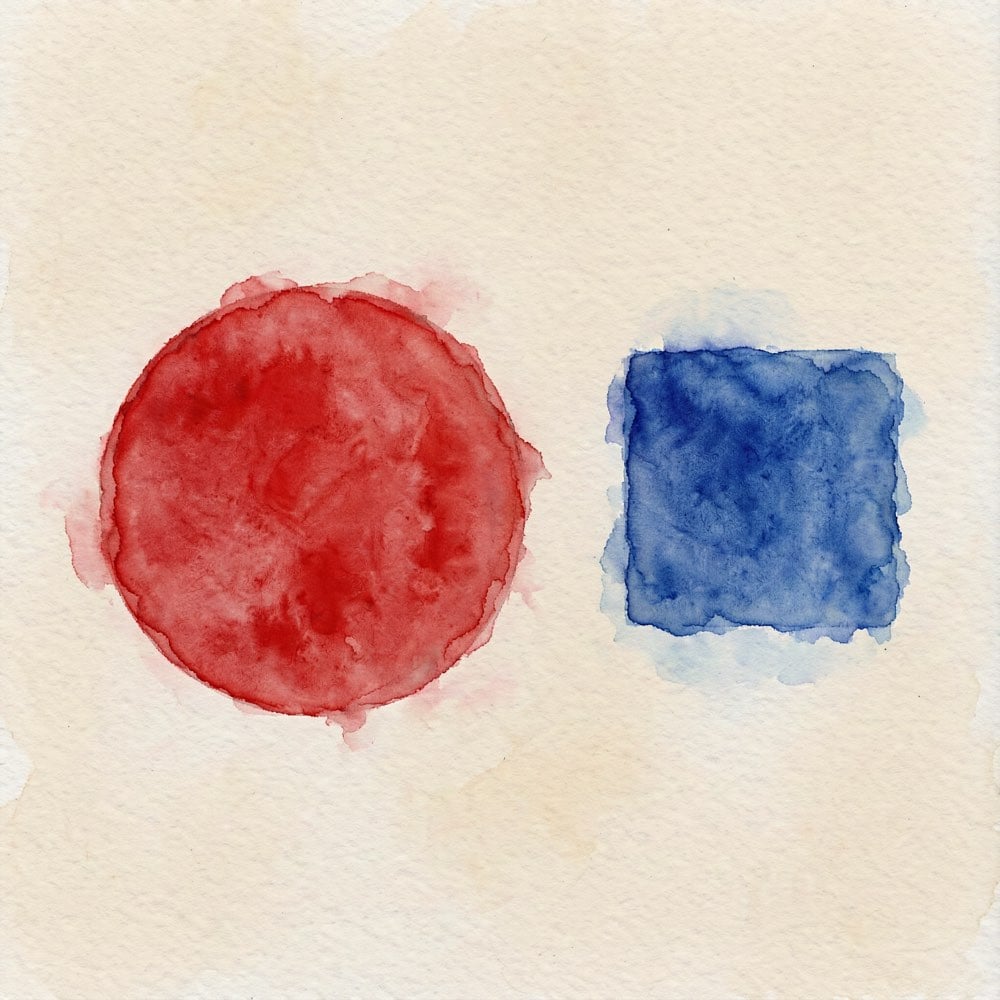
- References: a red circle and blue square reference restyled as watercolor kept its composition, positions, and colors. URLs, data URIs, and two references all worked.
- Latency: 2K text-to-image 18–35 seconds, 2K reference generation 16–54 seconds, 4K 45–58 seconds.
- Billing: 20 2K images plus 6 4K images cost 62 cents, matching
\$0.022 / \$0.03per image.size,response_format, and reference count did not affect the price; failures were not billed. - Image count:
nis fixed at 1.n=2returns one image and bills once. Send concurrent requests for multiple images.

Technical Specs
Practical Use
Recommended Workloads
Chinese posters and e-commerce
Titles, dates, selling points, and small text render accurately. Good for movie posters, campaign assets, e-commerce hero images, and social visuals.
Reference-guided restyling
Pass references in
images to preserve composition and subject while changing style, material, or palette. Editing is stronger than raw text-to-image.4K print and film assets
-4k always returns 4096×4096, suitable for print, film concept art, and images that need heavy cropping.Batch 2K generation
-2k is the standard tier. Since official 1K/1.5K/2K pricing is identical, 2048×2048 is the best value; budgets stay predictable per image.seed, watermarks, or search augmentation; and selections where general text-to-image quality is the top priority.
Code Examples
Text-to-image with the default base64 response:images array; add response_format: "url" for web display:
Best Practices
- Do not pass
size:-2kalways returns 2048×2048 and-4kalways returns 4096×4096; the value is overridden. - Use
imagesfor references: the legacyimagefield outputs only 1536×1536 withoutsize, while still billing at the 2K/4K price. - Use URL mode for the web: a 4K base64 response can reach 26 MB. Save base64 server-side; request
response_format: "url"for browser display. - Set timeouts by tier: ≥120s for 2K, ≥240s for 4K, 360s for 4K base64. This is synchronous; a disconnect loses the result but is usually still billed.
- Compress references: resize the long edge to 2048px and use quality 0.9; keep each image ≤20MB and the combined payload under about 6MB.
- Do not retry moderation blocks: a content block is deterministic and returns HTTP 400
content_safety_violation. Adjust the prompt; do not retry.
Pricing and Availability
Pricing
Pricing follows the official list and may change. The table is for reference only; the Model Pricing tab in the top navigation is authoritative: Model Pricing.
size, response_format, and reference count do not affect the price; failed requests are not billed. The usage object is a placeholder (prompt_tokens is always 1000) and cannot be used for reconciliation.
Groups
Both models are available in theDefault and SVIP groups at 1.0x. A new Token can call them directly. The Token’s billing model can be Pay-as-you-go Priority or Pay-per-request; we recommend Pay-as-you-go Priority so the same Token also covers token-billed models.
Top-Up Bonuses
The prices above are list prices. Top-up bonuses and group discounts stack on top; current top-up bonuses bring the effective price to about 83–91% of list. Actual charges come from the console. See Top-up Bonuses.Summary
Hy-Image 3.5 Preview has a clear sweet spot: Chinese text plus reference-guided editing. General text-to-image is not its main battlefield. APIYI splits it into-2k and -4k fixed-size models; the official 1K/1.5K/2K same-price logic lands directly on 2048×2048, making billing and capacity planning simpler.
- Start with
-2k: 2048×2048 covers most web, poster, e-commerce, and social scenarios, and $0.022/image is easy to budget. - Use
-4kfor print or heavy cropping: $0.03/image; 4x the pixels of 2K for about 36% more cost. - Use
imagesfor references: avoid the legacyimagefield, which defaults to 1536×1536 while charging the 2K/4K price. - Need non-square output, multi-turn editing, or reproducible seeds? These are not current strengths of the compatibility layer; choose another model or wait for the native capabilities to be exposed.
Sources and verification date:
- Tencent Cloud TokenHub Hy image-generation guide:
cloud.tencent.com/document/product/1823/135745 - Hy Image3.5 preview official campaign page (release and pricing):
cloud.tencent.com/act/pro/hyimage35preview - Official launch coverage:
next.ithome.com/archiver/1/005/589.htm - Artificial Analysis Image Arena data (republished by third-party aggregators):
ultrabench.ai/image/models/hunyuanimage-3-5-preview,qquantum.ai/technology/models/image-generation/hunyuanimage-3-5-preview - APIYI internal testing, 2026-11-24 (report not public)
- Research and price verification date: 2026-11-25 (UTC+8)